MAKING ROOM FOR THE POSSIBLE
Revised illustrated edition, October 2026
The handmade to other media worlds of Brant Kingman
A window to climb into. A ship to steer.
A world with room for someone IT STARTS WITH MAKING
Look at the tabletop, above. Painted buildings stand on their bases; figures gather at the windows; a cowboy and a suspended sun share the scene. Pink light washes the backdrop. This is a world being assembled in plain sight. The photograph brings Kingman's process into focus: he paints, cuts, builds, arranges and illuminates the places where a story might happen.
Then, one of endless new stages.
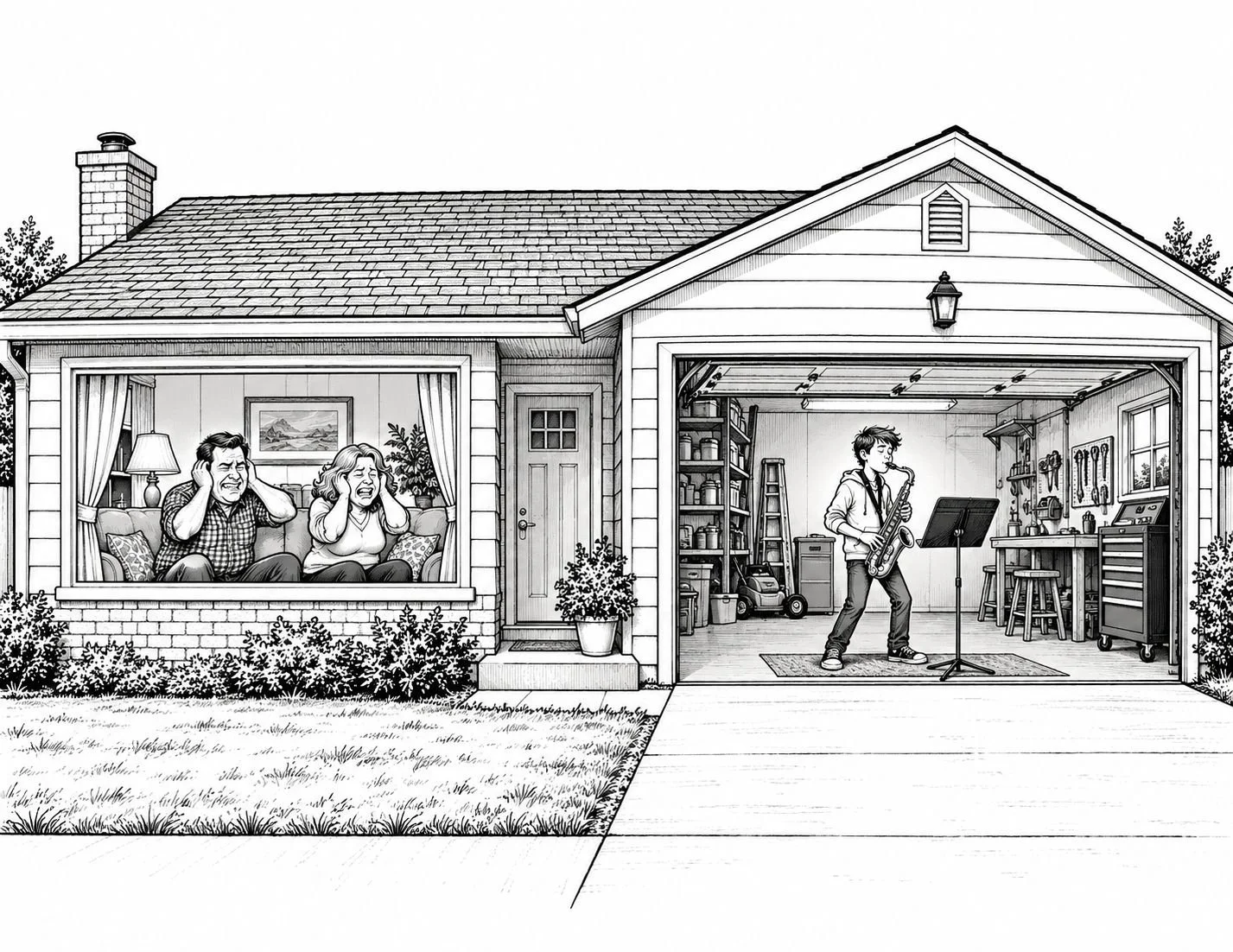
The suburban garage project: an AI-generated concept illustration of a young saxophonist and the household response.
TAKE THE WHEEL
One close portrait: the mysterious woman and her parrot. AI-developed at Kingman's direction for projection on the sail of Self Discovery.
THE ILLUSION HAS EDGES
THAT IS A PART OF IT’S LIFE
The painted window waits.
Someone else brings the story.
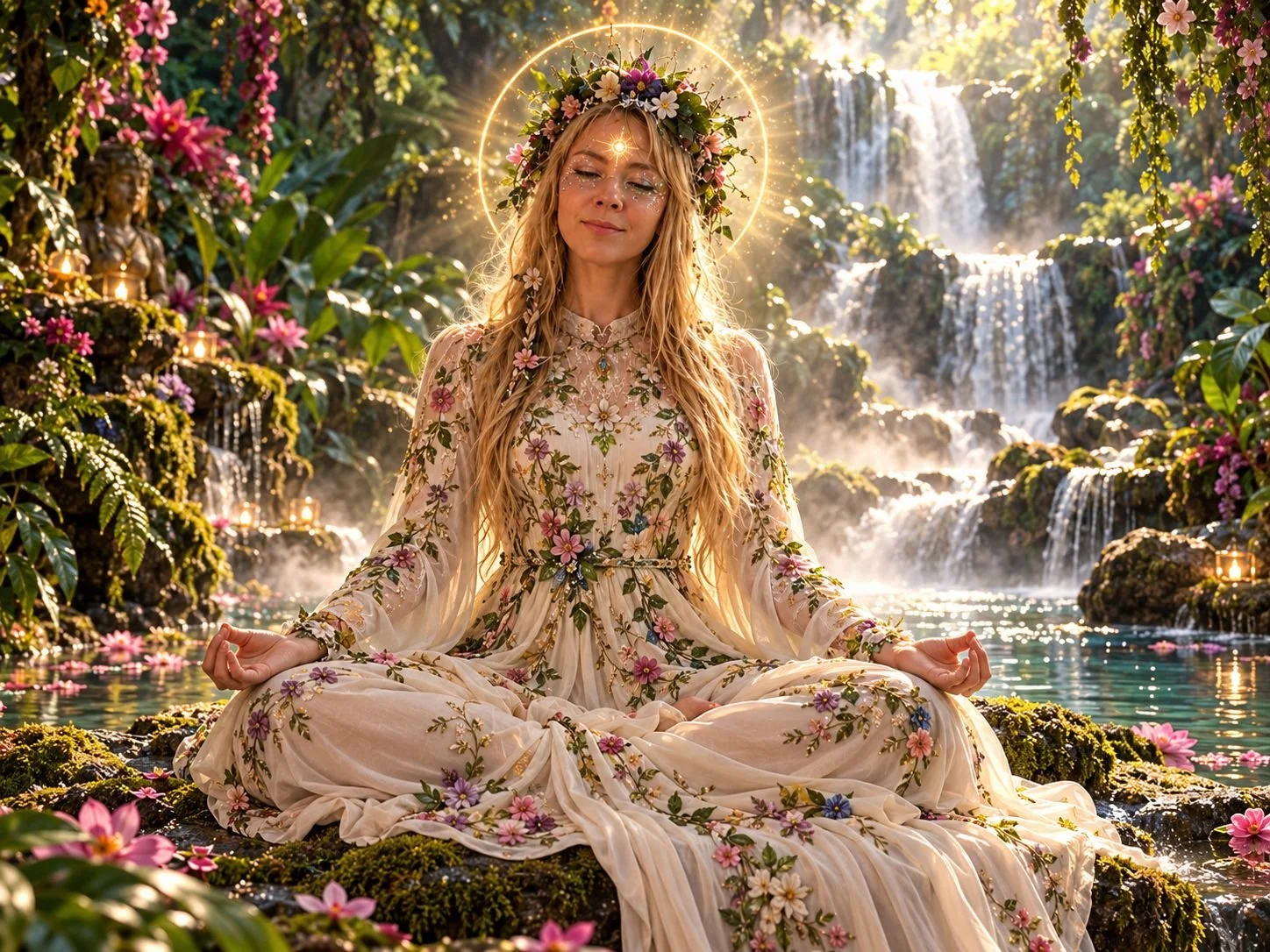
Serene Meditation by a Jungle Waterfall. An AI-generated portrait developed at Kingman's direction.
There is more here
than you first saw.
"What do you know about me?" Brant asked. Then he made the question more specific: could I describe who he is and how his art relates to the world around him? His work suggests an answer in the things he refuses to leave as they are.
A rotten stump might disclose a dragon. A tractor hood might become a face. A spring stretched inside a metal box might acquire a voice. Recognition starts the conversation; the next step is to make something of it.
That way of seeing extends to people. A suburban garage becomes the birthplace of a talent, while the people in the adjoining house react. As participants contribute their own short scenes, the neighborhood can grow.
In The Artists' Quarter, each window offers a small stage. One person's music becomes another person's irritation. A private gesture becomes a public story. Kingman builds the architecture and leaves room for the unruliness of human presence.

His ship, Self Discovery, gives the invitation a bodily form: a deck, a wheel, a sail and places for people to stand. The search for "the treasure that is their spirit" becomes an activity someone can enter. A visitor can take the wheel before knowing where to go.
The screen has a physical destination. An image developed in conversation will meet fabric, light, scale and people aboard a ship he built. Those conditions become part of the work. Freedom is also a question. The Gilded Cage brings attraction and confinement into the same space. It asks what happens when an enclosure becomes inviting, and whether we recognize the boundaries we have learned to accept.
Freedom is also a question. The Gilded Cage brings attraction and confinement into the same space. It asks what happens when an enclosure becomes inviting, and whether we recognize the boundaries we have learned to accept.
Humor makes these questions approachable. A parrot on the shoulder of a mysterious woman interrupts the atmosphere of danger. An official-looking door sign undermines its authority with a ridiculous qualification. The joke gives someone permission to relax and look again.
The darker currents remain: threatening figures, monsters, rough seas and the less glamorous sides of familiar myths. His proposed cowboy films ask what survives beneath an image repeated t
Symbols become material to work with. Visitors can inhabit them, alter their meaning and contribute a scene the artist could not have supplied alone.
These symbols become material to work with. Visitors can inhabit them, alter their meaning and contribute a scene the artist could not have supplied alone.
Seeing the actual flats changes the emphasis of this portrait. The handwork is central: irregular painted contours, separate planes, supports, small figures and carefully placed light. The scene is both an image and a collection of things arranged in space. Plywood, canvas, old lumber and found objects retain the familiarity of things someone might touch, repair or make. Projection gives those structures another life. A painted surface can become a room, a sea or an expanse of stars. The tabletop is already a theater. Its scale makes relationships visible: a figure against a facade, one building beside another, a light behind a painted edge. It lets a possible world be tried out with the hands. That material intelligence matters when discussing AI. The generated image enters an existing practice of choosing, shaping and staging. Kingman decides where it belongs, how it meets a surface and what people might do in its presence.
Working with Brant also reveals how much depends on a small detail. The glasses must sit at the right point on the nose. The eyes must meet ours. The dragon's tongue must emerge from the place he sees within the stump. An attractive approximation will not do. That insistence creates a productive difficulty. He directs with particular intentions, yet the projects depend on others exercising their own. How much can a visitor change the story? Can a contribution change the artist's conception? A generous invitation leaves enough room to surprise its maker. The abundance carries a risk. Pirates, galaxies, cowboys and gilded confinement compete for attention. The spectacle brings someone closer; the invitation determines whether that person finds a meaningful role. The test is the encounter: someone steps behind a window, makes a gesture, finds a partner or shoots a scene. The carefully built setting becomes a place where something unplanned can occur.
The world supplies discarded materials, inherited myths, social barriers, technical problems and people with stories. Kingman rearranges them into situations where another response becomes possible.
Beneath the spectacle, I sense a desire for contact. He wants people to climb into the window, stand on the deck, make the scene and discover something through one another. The art creates an occasion for that discovery.
This essay is itself part of an exchange. Brant asked a system he had worked with to describe him, then supplied a photograph that sharpened the account. It reflects our conversations and the work he has shared; it is not a report from a studio visit. His authorship is visible in the sustained effort to make another intelligence understand what he sees, and in the physical worlds he builds to give that vision somewhere to live.